All the years before the Intifada, from when I entered the university in 1984, I was educated and I was given lots of books to read. I was directed, oriented even, by people from my own faction, the Popular Front for the Liberation of Palestine. Everything was theoretical and we used to compete with the other factions and with other people, to see who had read more than the others. We were like pupils with our leaders, watching them, listening to them talking to each other and discussing issues and having arguments with each other.
When the Intifada started, everybody was put on the spot by this phenomenon and had to choose to do something about it. It was like a big test, of whether you had understood anything or believed in something from your political education so far. I remember the very first day of the Intifada, the 9th of December 1987, this exact day when four Palestinians were killed in a traffic acident in Gaza near Beit Hanoun.
I was with my ex-girlfriend and we were 'having kisses' in Jerusalem in Solomon's Cave! When we left the cave it was around seven o'clock in the evening, and we were listening to the news in the taxi coming from Jerusalem to Ramallah. It said that there were clashes in Gaza, very violent clashes, as a result of the deaths of these Palestinians.
A few days later, the student movement in Birzeit University wanted to do something, to take a position, because the clashes had spread all over the country to all the universities except Birzeit. We decided not to do anything at that time because we wanted to see what would happen, and with such demonstrations it was very clear that the universities would be closed by Israel. We decided that we would commit any acts of violence in żorder that we would be the only open university. This way there would be a shelter for students, an open place where we could practice real politics and follow up the events. It was a tactic that all the factions agreed to.
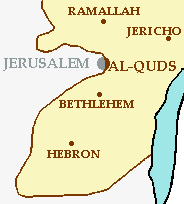
Map by Michael O'Neill.
"For me the Intifada was not just a popular revolution, it was also like an exam.
A test of practicing your political beliefs, to find out whether you could implement them, apply them to real life.
Basically, it was a chance to test your ideology in the cauldron of reality."